Home • Study English Abroad • Study Abroad in Australia
Study Abroad in Australia
Your 2026 guide to language schools, universities, and high schools. Get free expert advice on visas, costs, and part-time work from a team that’s been there.
Why Study Abroad in Australia? Australia combines high-quality education with a relaxed lifestyle, making it a top choice for international students. When you choose to study abroad in Australia, you aren’t just learning a language; you are building a life in a country famous for its safety, natural beauty, and welcoming multicultural society. Whether you are looking for a rigorous academic path or a flexible working holiday experience, Australia offers an environment that helps you grow confident in English.
Which Australian City is Right for You? You can choose to study in a city known for creative culture, coastal living, or a relaxed outdoor lifestyle. Australia offers a wide range of environments, so it is easy to find a place that suits your personality and goals.
- Melbourne: Known for its creative culture and diverse communities.
- Sydney: World-famous landmarks meet everyday city life.
- Brisbane & Gold Coast: Offer warm weather and coastal living.
- Perth: Provides a calm, spacious setting with easy access to nature.
- Cairns: A tropical gateway to the Great Barrier Reef and relaxed living.
What is the International Student Experience Like in Australia? Australia is famous for its multicultural population, which helps international students feel at home quickly. Schools here offer a wide range of English courses, including general English, academic preparation, and more.
If you are still deciding if studying abroad is right for you, or want a complete overview of the process for English learners, read our guide to English Language Study Abroad.
Key Takeaways
- Generous Work Rights: The Australia student visa (subclass 500) allows you to work part-time (48 hours per fortnight), and the Working Holiday visa Australia (subclass 417) allows full-time work.
- No Automatic PR Path: Completing only an English language course does not make you eligible for a post-study work visa. You generally need a university degree for that.
- High Cost of Living: Australia is a premium destination. You must prove you have at least AUD $29,710 for one year of living costs when applying for a student visa.
- Mandatory Healthcare: You must hold Overseas Student Health Cover (OSHC) for the entire duration of your student visa.
- Transport Costs Vary: Where you live matters. Queensland now offers 50-cent public transport fares, while international students in Sydney (NSW) typically pay full adult prices. This decision was made permanent in 2025 and it’s a huge advantage in living in this area.
Australian visas for international students
Types of Visas in Australia for All International Students
The visa you need for studying abroad in Australia depends on your goals and course length, from the Australia Student visa (subclass 500) for long-term study to the Working Holiday visa (subclass 417) for combining work and travel.
The three main pathways for students from Japan, South Korea, and Italy are:
| Visa Pathway | Best For | Work Rights | Study Limit |
| Student visa (subclass 500) | Long-term, full-time study ( > 3 months) | Yes (Part-time). 48 hours per fortnight. | No limit (must be full-time). |
| Working Holiday visa (417) | Working, traveling, and short-term study | Yes (Full-time). | Up to 4 months (17 weeks). |
| Visitor visa (600/601) | Short-term “taster” courses | No. | Up to 3 months. |
Australia Student visa (subclass 500)
This is the main Australia student visa for full-time students. It requires a Confirmation of Enrolment (CoE) from your school and allows part-time work.
Working Holiday visa (subclass 417)
This visa is available for citizens of Japan, South Korea, and Italy (ages 18-35 for Italy, 18-30 for Japan/South Korea). It’s a popular student Visa in Australia alternative, allowing full-time work and up to 4 months of study.
Visitor visa (subclass 600) / eTA (601)
This visa is for short-term study (up to 3 months) and strictly prohibits work.
Always check the official rules at the Australian Department of Home Affairs.
Cost of studying and living in Australia
Cost of Studying and Living in Australia for International Students
Australia offers a high quality of life, but it is also one of the more expensive study destinations. The total cost of studying in Australia will vary based on your city and lifestyle, but you will need to budget for tuition, accommodation, food, and transport.
Estimated Tuition Fees
Australia has a wide range of tuition fees that vary significantly between public schools, private institutions, and universities. Below are estimated annual fees for international students. English language schools are typically billed weekly.
Type of School | Estimated Tuition Fee (AUD) |
English Language Schools | $435 – $600 per week |
Elementary Schools | $17,000 – $23,000 per year |
High Schools | $18,000 – $28,000 per year |
Universities | $20,000 – $50,000 per year |
Vocational Schools | $6,000 – $28,000 per course/year |
Note:
Fees are estimates and vary by institution, city, and program. University fees for specialized degrees like medicine can be significantly higher.
Estimated Cost of Living
Your total cost of studying in Australia will include accommodation, food, transport, and utilities. The Australian government requires you to have access to AUD $29,710 or JPY 3,064,809 for your first year of living costs.
Below is an estimated monthly budget for a single international student in a major city like Sydney.
Expense Category | Estimated Monthly Cost (AUD) |
Accommodation (Shared) | $1,200 – $1,800 |
Food & Groceries | $400 – $600 |
Transport (Public) | $150 – $200 |
Utilities & Phone | $150 – $250 |
Total Estimated Monthly | $1,900 – $2,850 |
Recommended reading:
While Australia offers a premium lifestyle, it is one of the more expensive options; for a breakdown of how it compares to cheaper alternatives like the Philippines or South Africa, see our study abroad country comparison.
Work rights in Australia
Working While Studying in Australia for International Students
Many international students in Australia can work. The rules for work while studying in Australia depend on your visa type. It is essential to know and follow the rules for your specific visa.
A Student visa is for full-time study with part-time work, while a Working Holiday visa is for full-time work with limited study.
Visa Type | Work Rules | Study Limit |
Student visa (subclass 500) | Yes (Part-time). 48 hours per fortnight (24 hours/week). | No limit (must be full-time student). |
Working Holiday visa (417) | Yes (Full-time). | Yes (Limited). Up to 4 months. |
Visitor visa (600/651) | No. Not permitted. | Yes (Limited). Up to 3 months. |
The Important TFN (Tax File Number) Rule
Before you start working, apply for a TFN (Tax File Number). If you don’t give this to your employer, you will be taxed at the highest rate (approx. 47%) instead of the lower student rate.
The Post-Study Work Availability in Australia
The Temporary Graduate visa (subclass 485) is for international students who complete a higher education degree (like a Bachelor’s or Master’s) or some eligible VET courses Australia offers. An English course is a pathway to help you qualify for those courses, but it is not the qualification itself.
Important:
Completing only an English language course does not make you eligible for a post-study work visa.
Healthcare and insurance
Healthcare and Health Insurance in Australia for International Students
Australia has a strict “gatekeeper” model for student healthcare. You generally cannot access the public Medicare system. Instead, the government requires you to hold private insurance as a condition of your visa.
Overseas Student Health Cover (OSHC)
If you are on a Student Visa (500), you must purchase OSHC.
- Mandatory Duration: Your policy must cover the entire period of your visa grant, not just your course dates. Gaps in coverage can lead to visa cancellation.
- What It Covers: It covers visits to the doctor (GP), hospital treatment, and ambulance services (which are not free in Australia). It usually has limits on pharmaceuticals.
- Cost Reality: A policy for a single student costs approx. AUD $550–$700 per year. However, “Family” policies for couples or students with children are much more expensive, A couple/family policy jumps to $3,000–$5,000+.
Required Health Cover for Non-Student Visas
If you are on a Working Holiday or Visitor visa, you are not eligible for OSHC.
You should purchase “Overseas Visitors Health Cover” (OVHC) or comprehensive travel insurance that includes medical repatriation.
Public Transportation
Public Transportation Rules and Costs in Australia
Public transport rules and costs vary wildly depending on which Australian state you live in.
Table: Public Transport in Australia: State-by-State Comparison
State / City | Primary Transport Card | Key Rules & “Hacks” | Estimated Cost (AUD) |
Queensland (Brisbane, Gold Coast, Cairns) | go card (or Contactless) | 50-Cent Fares: As of 2025, essentially everyone pays a flat rate of 50 cents for any trip on the Translink network. No special student card is needed. | AUD $0.50 / trip |
New South Wales (Sydney) | Opal card | International students must typically use an Adult Opal card and pay full fares. Concessions are only for full government scholarship holders. | $4.00 – $10.00+ / trip |
Victoria (Melbourne) | myki | You must buy an iSTP (International Student Travel Pass) to get a 50% discount. This is a bulk pass (90-365 days). Trams in the CBD “Free Tram Zone” are free. | ~$2.50 / day (with pass) |
Western Australia (Perth) | SmartRider | You must register your Tertiary SmartRider through your university portal to activate the concession. Don’t forget your card, or you pay full cash fare. | $1.00 – $2.50 / trip |
Queensland is currently the most affordable state for student transport.
- 50-Cent Flat Fares: As of 2025, Queensland has made its “50-cent flat fare” permanent. You can travel anywhere on the Translink network (bus, train, ferry, tram) for just AUD $0.50.
- Universal: This applies to everyone, including international students. You just need a go card or a contactless payment method.
Sydney is the most expensive city for student transport.
- No Concessions: International students generally do not get student discounts. You must use an Adult Opal card and pay full fare.
- Costs: Expect to pay AUD $30–$50+ per week for regular commuting.
Melbourne has a specific system for concessions.
- iSTP: Undergraduate students at participating universities can buy an International Student Travel Pass (iSTP). This is a bulk pass (e.g., for 6 months or a year) that gives you a 50% discount.
- Free Tram Zone: Trams in the very center of the Melbourne CBD are free, but you must pay if you travel outside this zone.
Student living in Australia
Life in Australia for International Students
The student life in Australia is famous for being relaxed, safe, and social, built on cultural values of friendliness, fairness, and a love for the outdoors.
Australian Culture and Social Etiquette
Australian culture is generally informal, and people value “mateship” and giving people a “fair go”.
The culture is built on a few key ideas:
- Mateship: This ideal is more than just “friendship”; it means being loyal to friends and believing everyone deserves an equal chance.
- Informality: Greetings are casual (“G’day,” “How’s it going?”) and people often use slang like “arvo” (afternoon) and “no worries” (you’re welcome).
- Fair: While informal, Australians take fairness seriously. Waiting in line (queuing) and not pushing ahead is seen as “fair” and respectful
The "USI" (Unique Student Identifier)
You cannot get your qualification without one. To receive your certificate or degree in Australia, you need a USI (Unique Student Identifier). It is a free government reference number that tracks your training. We recommend applying for it as soon as you arrive.
Sun Safety (The "UV" Factor)
Australia is very safe, but the environment can be harsh. The sun is much stronger here than in Europe or Asia. Always follow the “Slip, Slop, Slap” rule (shirt, sunscreen, hat) and check the UV index daily.
Safety in Australia
Safety for International Students in Australia
Australia is considered a very safe country with a high quality of life and low crime rates.
Student safety is a high priority, and campuses are very secure. The main risks are non-violent, like being aware of your belongings in big cities. The most important safety tip for daily life is to be aware of environmental dangers, like strong sun (wear sunscreen) and beach safety. Always swim between the red and yellow flags, which shows where lifeguards are on duty.
Accommodation in Australia
Accommodation Options in Australia for International Students
We are here to help you find the right living experience for your goals and budget. Every international student is different, and we can help you understand your options, from living with a local family to finding a private apartment.
The main types of accommodation are:
- Homestay: Live with a local host family to experience the culture and practice your English.
- Student Dormitory: Live in a residence with other international students, often close to your school.
- Sharehouse: Rent a room in a house or apartment with other students or young professionals.
- Private Apartment: Rent your own apartment for more independence and privacy.
Our team can advise you on the best match for your study. For a detailed breakdown of each option and to get help with booking, please visit our student accommodation page.
Australian weather conditions
Seasons and Weather in Australia
The seasons in Australia are the opposite of those in the Northern Hemisphere, with summer in January and winter in July.
Australia is a huge country, so the climate varies. Sydney and Melbourne have four distinct seasons, Brisbane is subtropical, and Cairns is tropical (wet and dry seasons).
City | Summer (Dec-Feb) Avg. Temp | Winter (Jun-Aug) Avg. Temp |
Sydney | 26°C (79°F) | 17°C (63°F) |
Melbourne | 26°C (79°F) | 14°C (57°F) |
Brisbane | 30°C (86°F) | 22°C (72°F) |
Perth | 32°C (90°F) | 18°C (64°F) |
Cairns (Tropical) | 31°C (88°F) | 26°C (79°F) |
Where to study in Australia?
Top Student Cities in Australia for International Students
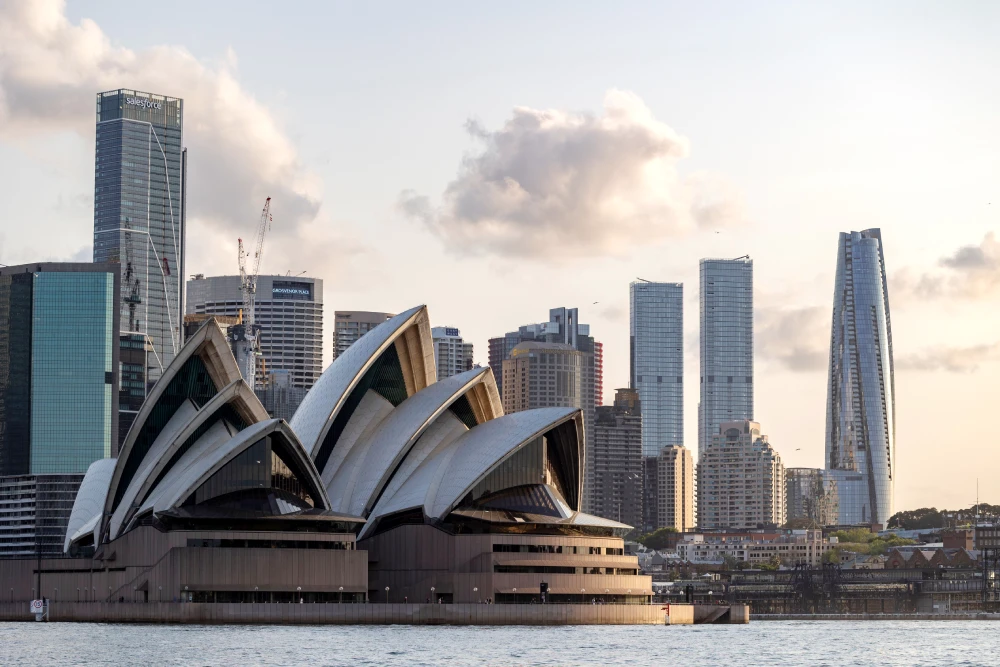
From the iconic Sydney Opera House to the vibrant cafes of Melbourne, Australia’s cities are safe, clean, and easy to explore. Your study abroad in Australia experience also includes the chance to travel.
City | Vibe | Best For |
Sydney | Big city, iconic landmarks | Students focused on career goals; city lovers |
Melbourne | Creative, arts, and coffee culture | Students who love arts, culture, and events |
Brisbane | Sunny, relaxed, outdoor lifestyle | Students seeking a balance of city life and value |
Perth | Calm, spacious, nature-focused | Students who want a relaxed pace and outdoor life |
Gold Coast | Beach-focused, lively | Students seeking a beach-centric social life |
Cairns | Tropical, gateway to nature | Students on a budget who love adventure |
Travel spots in Australia
Must-See Australian Travel Spots for International Students
One of the best parts of studying in Australia is the chance to travel.
The country is massive, but many of the world’s most famous natural wonders are accessible for a long weekend trip or school holiday break.
- The Great Barrier Reef: The world’s largest coral reef system, easily accessible from Cairns or Brisbane.
- Uluru (Ayers Rock): The spiritual heart of the Australian outback and a sacred site for Indigenous Australians.
- The Great Ocean Road: A famous coastal drive near Melbourne, known for the “Twelve Apostles” rock formations.
- The Whitsunday Islands: A group of 74 tropical islands, home to the stunning Whitehaven Beach.
- The Blue Mountains: A UNESCO World Heritage site just west of Sydney, perfect for hiking.
FAQ
FAQ About Studying in Australia
- Can I work while studying in Australia?
Yes. On a Student visa (500), you can work 48 hours per fortnight, but during scheduled course breaks, students can work unlimited hours. On a Working Holiday visa (417), you can work full-time. - Do English courses lead to a post-study work visa?
No. Completing only an English course does not make you eligible for the Temporary Graduate visa (485). You must complete a degree or eligible trade qualification. - Is the Working Holiday visa a good option for studying?
Yes. It allows you to study for up to 4 months (17 weeks) while working full-time to fund your trip. - What is the cost of studying in Australia?
It varies, but you must prove you have AUD $29,710 for living costs plus tuition fees to get a student visa. - How much is public transport?
It depends on the state. In Queensland, fares are 50 cents. In Sydney, you pay full adult fares (approx. $50/week).
Summary
In Summary: Is Studying in Australia Right for You?
Studying in Australia is a fantastic choice if you want high-quality education, a safe lifestyle, and excellent work rights.
While it is a higher-cost destination, the ability to work part-time and the incredible quality of life make it a worthwhile investment. Just remember that if your goal is a post-study work visa, you will need to plan for further studies beyond your English course.
Still comparing destinations? See how Australia stacks up against Canada, the UK, and others in our guide on how to choose the best country to learn English.
Go! Go! English is part of the Go! Go! World family, helping students since 2009. We partner with language schools, universities, and high schools to help you find the right program, apply for your visa, and find accommodation. Our expert support from a team of former students is completely free. Contact our team for free advice.