Home • Study English Abroad • Study Abroad in Malta
Study Abroad in Malta
Your guide to studying English in the Mediterranean’s most vibrant student hub. Get free advice on schools in St. Julian’s, visas, and costs.
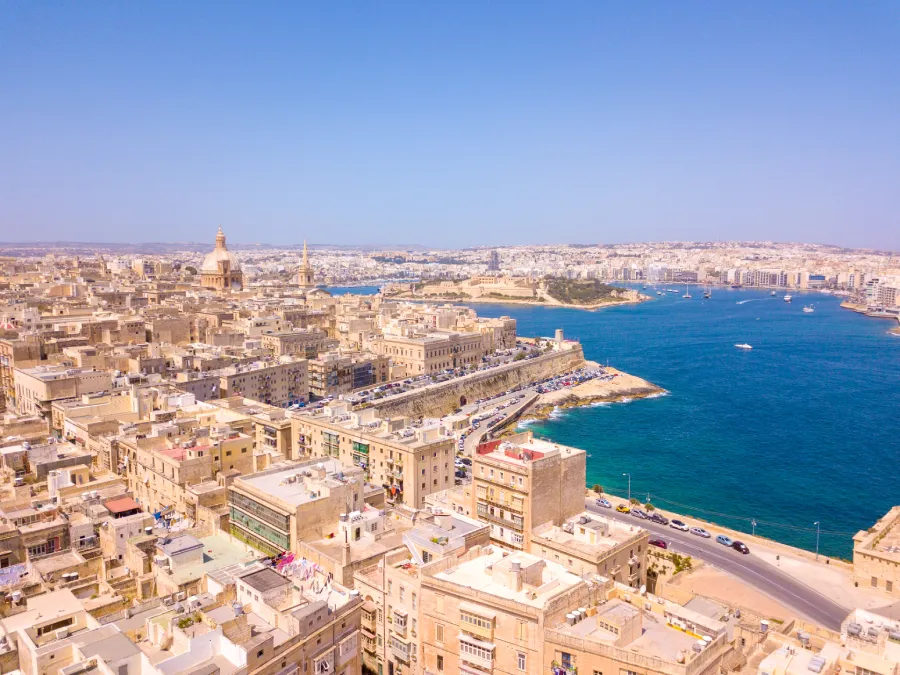
Why study abroad in Malta? Malta is a small island nation in the Mediterranean, but it’s big when it comes to English education. When you choose to study abroad in Malta, you are choosing an affordable, English-speaking destination with a warm climate and a rich history. It is the ideal choice for students who want high-quality education without the high price tag of the UK or Ireland.
Which Maltese City is Right for You? Malta’s main student areas are centered around St. Julian, where also the biggest night district, Paceville, is located. Other quieter student areas are Sliema, Swieqi and Gozo.
What is the International Student Experience Like in Malta? The student life in Malta offers a unique combination of lifestyle and learning. English is one of the official languages and is spoken in everyday life. Many language schools in Malta are in or near the capital’s charming historic towns. Students often enjoy a more relaxed pace here, all while receiving high-quality English education.
If you are just starting your research and want a complete overview of the entire process, from understanding the benefits to planning your trip, read our complete guide to English language study abroad.
Key Takeaways
- EU vs. Non-EU Visa Rules: This is the most important rule. EU students have freedom of movement. Non-EU students can enter visa-free for short courses (<90 days) but must get a National D-Visa before traveling for long-term study. For citizens of visa-waiver countries (Japan, South Korea), you enter on the waiver and then apply for the residence permit/visa extension locally for long stays, or apply for the D-Visa beforehand.
- Affordable Cost of Living: Malta’s main advantage is its affordability. The cost of living in Malta is significantly lower than in the UK, Ireland, or North America, making it a high-value choice for students on a budget.
- Work Rights: Students on a long-term Malta student visa are allowed to work while studying Malta (part-time) after their first 90 days in the country.
- Language & Immersion: English is an official language and is spoken by nearly 90% of the population. However, it’s not 100% immersion; you will also hear the other official language, Maltese, spoken in daily life.
- Safe & Sunny Lifestyle: Malta is one of the safest countries in Europe and offers a relaxed, Mediterranean lifestyle with a warm climate, beautiful beaches, and a rich history.
Maltese visas for international students
Types of Visas in Malta for All International Students
The visa process for international students in Malta depends entirely on your citizenship status (EU vs. Non-EU) and the planned duration of your course.
EU citizens have the right to study for any length with unlimited work rights, whereas non-EU students must obtain a National Long-Stay (D-Visa) for courses over 90 days, which permits restricted part-time work only after their first 90 days in the country.
Table: A quick comparison of visa options for international students in Malta.
Visa Pathway | Length | Work Rights? | Best For |
Visa-Free / Schengen (Short-Stay) | < 90 Days | NO | Short-term language courses and summer schools. |
National Long-Stay Visa (D-Visa) | > 90 Days | YES (Restricted)* | Long-term English or academic study (Non-EU). |
EU Freedom of Movement | Unlimited | YES (Unlimited) | All study types for EU citizens (e.g., Italians). |
For Italian (EU/EEA) Students
As an EU citizen, you have the right to study in Malta for any duration without a visa. You have the same rights as a Maltese citizen to work and live. For stays longer than 90 days, you simply need to register for the e-Residence Permit. This makes Malta one of the easiest and most flexible options for Italian students.
For Japanese & South Korean (Non-EU) Students (Short-Term: <90 Days)
As citizens of visa-waiver countries, you do not need a student visa in Malta for up to 90 days. You can enter the Schengen Area as a tourist and enroll in a short-term English course. This is the simplest option for a short study holiday.
For Japanese & South Korean (Non-EU) Students (Long-Term: >90 Days)
You must apply for a National Long-Stay Visa (D-Visa) before you travel to Malta. This is a formal application process that requires a Letter of Acceptance from your school, proof of accommodation, proof of funds, and comprehensive health insurance. This is a critical “reality check” as this process must be completed from your home country.
Always check the official rules at the Maltese immigration website, Identità.
Cost of studying and living in Malta
Cost of Studying and Living in Malta for International Students
The low cost of studying in Malta is a major advantage, offering a high-quality European experience for a fraction of the price of the UK or Ireland, with English language school tuition typically ranging from €200 to €400 per week.
The cost of living is significantly lower than in other English-speaking European countries, with an estimated total monthly budget for a single international student in a central area ranging from €625 to €1,240.
Estimated Tuition Fees
Tuition fees are competitive, and language schools in Malta are known for their value. Below are estimated annual fees for international students. English language schools are typically billed weekly.
Type of School | Estimated Tuition Fee (EUR) |
English Language Schools | €200 – €400 per week |
Elementary Schools | €4,000 – €9,000 per year |
High Schools | €8,000 – €18,000 per year |
Universities | €6,000 – €12,000 per year |
Vocational Schools (College) | €5,000 – €8,000 per year |
Note:
Fees are estimates and vary by institution and program.
Estimated Cost of Living
The cost of living in Malta is significantly lower than in other English-speaking European countries. Below is an estimated monthly budget for a single international student in a central area.
Expense Category | Estimated Monthly Cost (EUR) |
Accommodation (Shared) | €350 – €650 |
Food & Groceries | €200 – €250 |
Transport (Public) | €25 – €40 |
Utilities & Phone | €100 – €150 |
Total Estimated Monthly | €625 – €1,240 |
Recommended reading:
While Malta is the most affordable option in Europe, if you are looking for even lower costs and intensive 1-on-1 tutoring, you might also consider studying abroad in the Philippines.
Work rights in Malta
Working While Studying in Malta for International Students
The rules for work while studying in Malta differ greatly based on citizenship.
EU students have the right to work full-time with no restrictions, while non-EU students on a long-term visa (over 90 days) are permitted to work part-time (20 hours/week) after their first 90 days in the country. For non-EU students, the right to work only begins after the initial 90 days and requires the employer to obtain an Employment Licence from Jobsplus.
Visa / Student Type | Work Rules | Study Limit |
EU Student (e.g., Italy) | Yes (Full-time). No restrictions. | No limit. |
Non-EU (Student Visa) | Yes (Part-time). 20 hours/week. | Must be on a course >90 days. |
Non-EU (Short Course) | No. Not permitted. | Must be 90 days or less. |
Important:
For non-EU students, the right to work only begins after your first 90 days in Malta. You cannot work during your first three months.
Working in Malta as a non-EU student is possible but requires paperwork. Your employer must apply for an Employment Licence from Jobsplus. This license is tied to that specific job—if you quit, you lose the license and must re-apply with a new employer.
Healthcare and insurance
Healthcare and Health Insurance in Malta for International Students
Malta offers high-standard healthcare, but your access depends entirely on whether you are an EU citizen or a non-EU international student.
If you are from the EU/EEA, you generally have access to public healthcare through reciprocal European agreements. If you are from a non-EU country (like Japan or South Korea), you are responsible for your own private insurance, which is a mandatory requirement for your visa.
Student Origin | Requirement | Type of Cover | Estimated Cost (EURO) |
Non-EU (Visa D) | Mandatory | Private Schengen-compliant insurance (min. €30k coverage). | €150 – €250 / year |
EU / EEA | Optional | Public access via EHIC card. Private insurance is recommended for extras. | Free (Public) / Varies (Private) |
For Non-EU International Students
You must purchase private medical insurance to get your student visa. For students from outside the EU/EEA, holding a valid insurance policy is non-negotiable.
- Visa Requirement: Your policy must cover at least €30,000 for emergency medical expenses and repatriation to comply with Schengen visa rules .
- Coverage: This insurance generally covers emergency hospital treatment. For non-emergencies (like visiting a GP), you will typically pay upfront and claim it back from your insurer.
- Cost: Basic visa-compliant plans are very affordable, often ranging from €150 to €250 per year. More comprehensive private health insurance can cost between €400 and €800.
For EU/EEA International Students
European students can access public healthcare using their EHIC. If you have a valid European Health Insurance Card (EHIC) from your home country, you are entitled to state-funded healthcare on the same basis as a Maltese resident. However, the University of Malta strongly advises getting private insurance to cover costs that the EHIC does not, such as medical repatriation.
Public Transportation
Public Transportation Rules and Costs in Malta
Public transport in Malta consists mainly of buses and ferries, and for long-term students, it is effectively free.
Malta has abolished bus fares for residents, making it one of the most cost-effective countries for student travel in Europe.
Card / Ticket | Best For… | Cost (EUR) | Key Benefit |
Student Tallinja Card | Long-term students (3+ months) | Free Travel (after ~€25 reg. fee) | Unlimited free travel on day/night buses. |
Explore Card | Short-term (1-2 weeks) | €25 / 7 days | Unlimited travel, easy to buy at shops. |
Cash / Contactless | The “Gap” Period | €2.00 – €2.50 / trip | Use this while waiting for your Tallinja card to arrive. |
The Student Tallinja Card (Free Travel)
If you are studying for 3 months or longer, you can apply for a personalized Student Tallinja Card. Once you have this card, travel on standard bus routes is free of charge. You will pay a one-time registration fee (approx. €15) and postage costs, but you will not pay for daily tickets.
Important:
Apply for this card before you arrive or immediately upon arrival. It takes about 2 weeks to be processed and delivered. During this waiting period, you must pay cash fares.
Short-Term Options (< 3 Months)
If you are here for a short course, you have other smart options.
- Cash/Contactless: A single journey ticket costs €2.00 (Winter) or €2.50 (Summer) if bought on the bus.
- Explore Card: For very short stays (1-2 weeks), the 7-Day Explore Card costs €21 (Child) / €25 (Adult) and gives you unlimited travel on all services, including night buses.
Student living in Malta
Life in Malta for International Students
The student life in Malta is a unique blend of a relaxed Mediterranean lifestyle, a vibrant social scene, and 7,000 years of history.
Maltese Culture and Social Etiquette
Maltese culture is warm, friendly, and family-oriented, with a strong Catholic tradition. Locals are known for their hospitality. While punctuality is valued in school, you will also encounter “island time,” a more relaxed approach to time in social settings.
- Language: While English is an official language, you will hear Maltese spoken everywhere. Learning a few basic phrases like “Bonġu” (Hello) and “Grazzi” (Thank you) is highly appreciated.
- Festa Season: The summer is dominated by the village “festa,” a week-long celebration for a town’s patron saint with fireworks, music, and food.
- Public Conduct: When visiting churches, always dress modestly (cover shoulders and knees).
Safety in Malta
Safety in Malta for International Students
Malta is one of the safest study destinations in Europe, combining a low crime rate with a stable, welcoming environment.
For international students, Malta offers a unique advantage: it is a full member of the European Union with high safety standards, but its small size creates a close-knit, community feel that is harder to find in larger countries.
Global Safety Ranking
According to the 2025 Global Peace Index and other safety reports, Malta performs exceptionally well:
- Safety & Security: Malta is ranked among the safest countries in the world for “Order and Security,” with violent crime rates far below the European average.
- Political Stability: As a neutral EU nation, Malta has a high level of political stability and is not involved in international conflicts.
- Safe for Solo Travelers: It is consistently rated as a top destination for solo female travelers due to its safe streets and helpful local population.
The "Student Hub" Reality Check: St. Julian’s and Paceville
While the island is incredibly safe, the main student district requires standard “street smarts.” Most English schools are located in St. Julian’s, which is also the heart of Malta’s nightlife (Paceville). This area is busy, energetic, and safe to walk around at night, but it is also a tourist hotspot.
- Petty Crime: Like any busy European tourist hub, petty theft (such as phone snatching) can happen in crowded clubs or on the beach.
- Nightlife Safety: Paceville is very active until the early morning. It is safe, but we always recommend students stick together in groups when enjoying a night out, just as you would in your home country.
A Secure Environment for Learning
Malta’s small size is a major safety benefit for students.
- Community Feel: Because the student community is concentrated in St. Julian’s and Sliema, you are never far from your school, friends, or support network.
- No “Bad Neighborhoods”: Unlike large cities in the US or UK, Malta does not have dangerous “no-go” zones. You can safely explore the entire island, from the historic streets of Valletta to the beaches of Gozo.
- Supportive Police: The Maltese police are approachable and helpful to international students, and English is spoken fluently by all emergency services.
Important:
The biggest daily safety challenge for many students is traffic. Malta drives on the left, and the roads can be narrow and busy.
Accommodation in Malta
Accommodation Options in Malta for International Students
We are here to help you find the right living experience for your goals and budget. Every international student is different, and we can help you understand your options, from living with a local family to finding a private apartment.
The main types of accommodation are:
- Homestay: Live with a local host family to experience the culture and practice your English.
- Student Dormitory: Live in a residence with other international students, often close to your school.
- Sharehouse: Rent a room in a house or apartment with other students or young professionals.
- Private Apartment: Rent your own apartment for more independence and privacy.
Our team can advise you on the best match for your study. For a detailed breakdown of each option and to get help with booking, please visit our student accommodation page.
Malta weather conditions
Seasons and Weather in Malta
The weather in Malta is a major attraction, with a warm, Mediterranean climate and over 3,000 hours of sunshine per year. Summers are hot and dry, while winters are mild and wet.
City | Avg. Jan Temp (High/Low) | Avg. July Temp (High/Low) |
Malta | 16°C / 9°C (61°F / 48°F) | 32°C / 23°C (89°F / 73°F) |
Where to study in Malta?
Top Student Cities in Malta for International Students
While Valletta is the cultural capital, St. Julian’s is where students live and learn.
City | Vibe | Best for |
St. Julian’s | Vibrant, convenient, and the heart of Malta’s nightlife (Paceville); can be noisy at night. | Students who want to be near many language schools and the center of the island’s nightlife. |
Sliema | Peaceful, family-oriented residential area; quiet for study/sleep. | Students who want a quiet study and sleeping environment with easy access (10–15 min walk) to St. Julian’s nightlife. |
St. Paul’s Bay | Bustling urban hub, with a long seaside promenade, shopping malls, and endless cafes. | Students who want a commercial and social hub, easy ferry access to Valletta, or to swim off the rocky coast after class. |
Swieqi | Relaxed, seaside resort atmosphere; popular for more affordable accommodation. | Students looking for a more affordable, relaxed, seaside resort vibe close to Malta’s best sandy beaches. |
Gozo | Greener, rural, and tranquil, offering a completely different pace of life with stunning rugged landscapes. | Students who love nature, tranquility, world-class diving spots, and historic sights like the Citadel in Victoria. |
Travel spots in Malta
Must-See Travel Spots for International Students
Malta is an open-air museum. The island’s small size makes it easy to see everything.
- Valletta: The entire capital city is a UNESCO World Heritage site. Explore St. John’s Co-Cathedral and the Grand Harbour.
- Paceville: The Night light district where many language schools are located.
- Mdina: The “Silent City.” A stunning, walled medieval city on a hilltop.
- Blue Lagoon & Comino: The world-famous crystal-clear blue water for a perfect swimming day trip.
- St. Paul’s Bay: The commercial and social heart of Malta, famous for its long seaside promenade, modern shopping malls, and endless cafes.
- Sliema: A peaceful, family-oriented residential area located just a 10–15 minute walk from the buzzing nightlife of St. Julian’s
- Swieqi: This area offers a relaxed, seaside resort atmosphere.
- Gozo: Malta’s sister island. Visit the Ġgantija Temples (older than the pyramids), the Citadel in Victoria, and its beautiful beaches.
- Village Festas: Experience an authentic local festival with fireworks, music, and food.
FAQ
FAQ About Studying in Malta
- Can I work while studying English in Malta?
Yes, but with strict rules. EU students can work immediately. Non-EU students can work 20 hours/week, but only after their first 90 days of study. You must apply for an employment license, which requires a job offer. - Is Malta expensive?
No. Malta is one of the most affordable English-speaking destinations. Rent and daily costs are significantly lower than in Dublin or London. You can live comfortably on a budget of around €800–€1,000 per month (excluding tuition) . - Do I need a visa for Malta?
EU citizens do not need a visa. Non-EU citizens (like Japanese/Koreans) can enter visa-free for up to 90 days (Schengen rules). For courses longer than 90 days, you must apply for a National Long-Stay Visa (D-Visa). - Is public transport free?
Yes, for residents and students on courses over 3 months who hold a personalized Tallinja Card. Short-term visitors must pay fares. - What is the “best” city to stay in?
Most language schools are in St. Julian’s and Sliema. These areas are lively, full of restaurants, and close to the sea. For a quieter, more affordable life, look at St. Paul’s Bay or Msida (near the university).
Summary
In Summary: Is Studying in Malta Right for You?
Malta is the perfect destination for the value-driven and adventure-loving student who wants a European education without the high price tag.
It offers a unique combination: it is an English-speaking EU nation with a Mediterranean climate, affordable cost of living, and effectively free public transport for long-term students. While work rights for non-EU students are restricted in the first 3 months, the overall low costs make it a very high-value option.
If you are looking for sun, history, and a friendly, relaxed environment to improve your English, Malta is an unbeatable choice.
Unsure if this Mediterranean island is the right fit for you? Compare Malta’s costs, safety, and visa rules with other top destinations in our guide on choosing the best country to learn English.
Go! Go! English is part of the Go! Go! World family, helping students since 2009. We partner with language schools, universities, and high schools to help you find the right program, apply for your visa, and find accommodation. Our expert support from a team of former students is completely free. Contact our team for free advice.