
English schools
Linguaviva
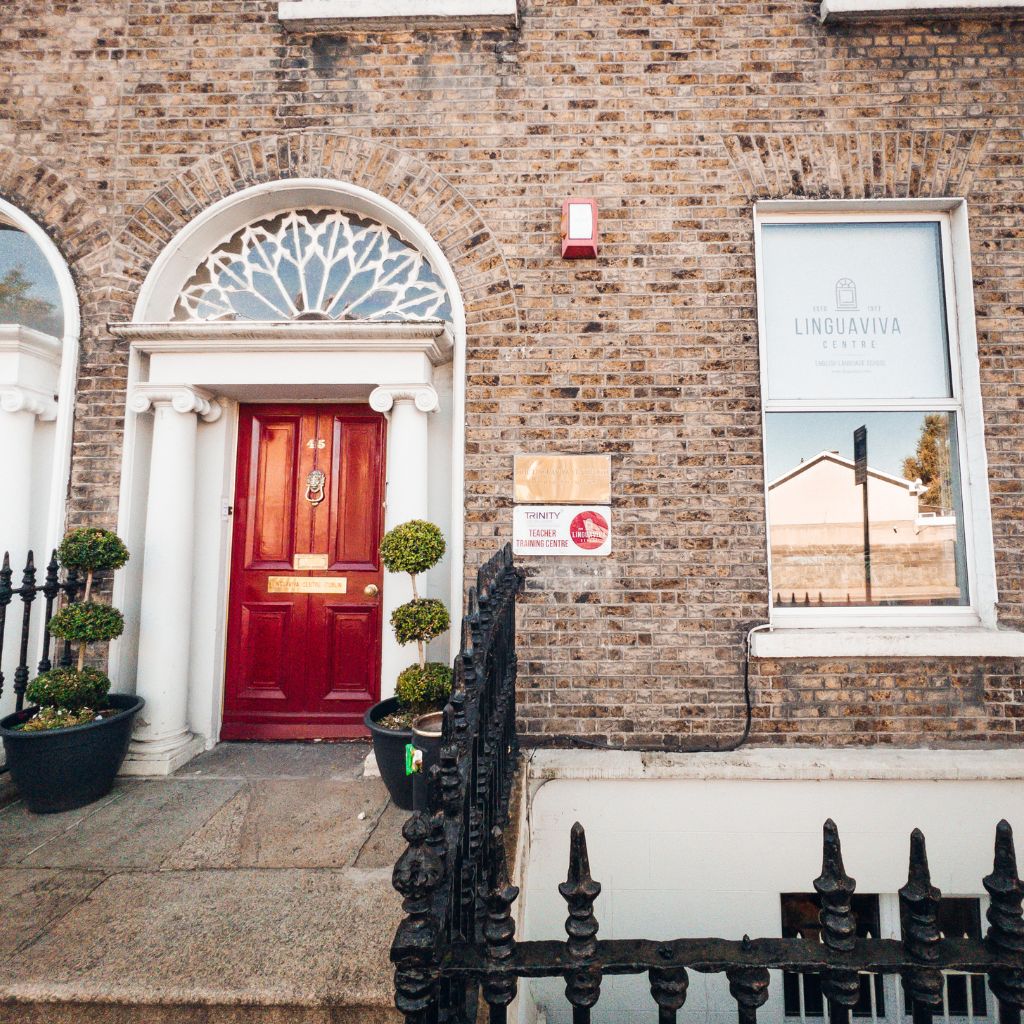
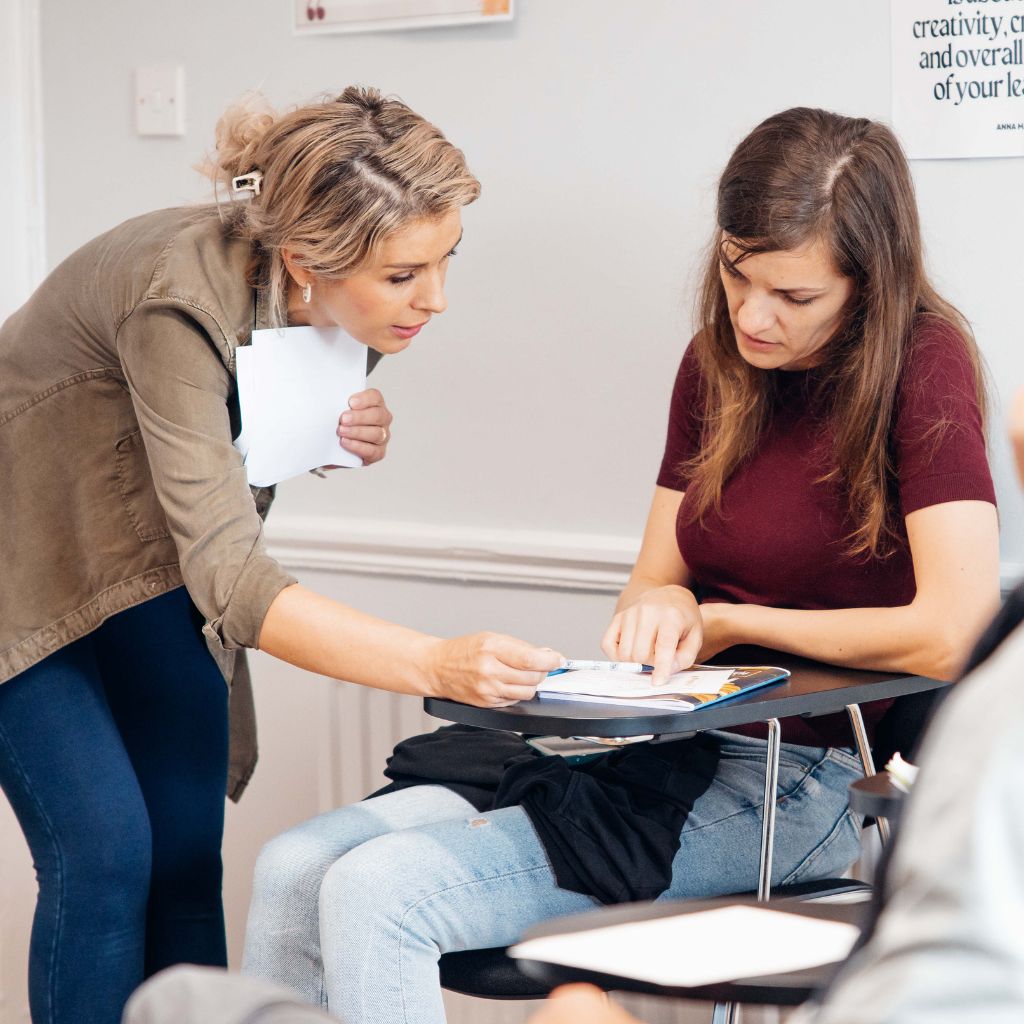
The Linguaviva Centre Dublin is a traditional, boutique school in Dublin City Centre. We offer small class sizes, excellent teaching standards, and amazing nationality mix of 30+ countries. We are also a teacher training centre.
Prices starting from
€330
Start your application with us!
JANUARY 2026 FIRST INTAKE DEADLINE FOR COURSES WITH A STUDENT VISA: JULY 10TH
Spots are limited, and deadlines are subject to change. We recommend all students to contact Go! Go! Nihon and submit their application well in advance of the deadline. We are also accepting early applications for the April 2026 term.
Linguaviva
Academic Programs
We Offer Adult, Junior, and Teacher Training Programmes.
- General English
- English for Professionals
- Exam Preparation
- Young Adult
- Junior Summer
- Group Mini-Stay
- One-to-One
Linguaviva
School features

Accepts Beginners
Perfect for first-time learners. No previous English knowledge is required, and classes start with the basics before progressing steadily to everyday communication.
TOEIC Preparation
A structured programme covering test strategies, practice questions, and targeted skill building. Students develop the accuracy and speed needed to improve their scores.
Native speaker instructors
Lessons are taught by qualified native speakers, giving students consistent exposure to natural pronunciation, modern expressions, and authentic communication.
Linguaviva
Our Courses
Linguaviva
English for Professionals
This course is aimed at students who work through English or want to work through English, and want to develop their communication skills for the 21st century workplace.
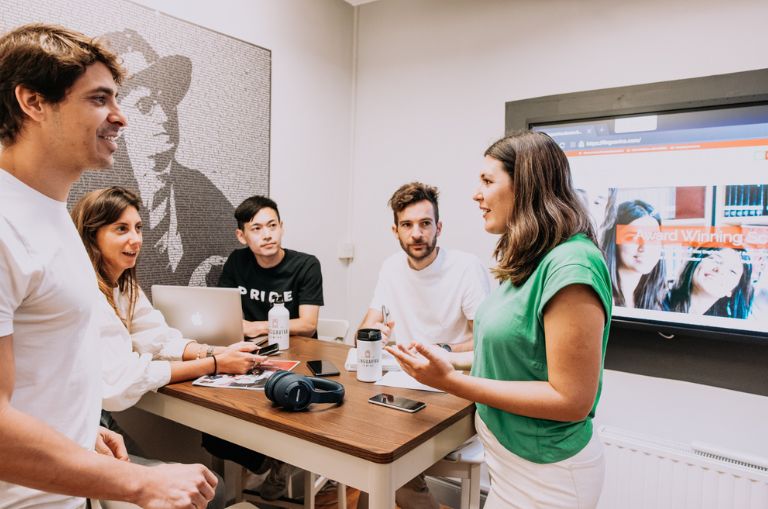
The reduced sized classes (average 6) are focused primarily on oral communication with themes connected to work such as leadership, management, teaching skills, presentations, meetings and future trends. Each week the class is involved in developing a product together through English.
The product could be a presentation, an audio guide, a blog or a round table discussion. Students conduct a project together and week by week develop a digital portfolio of what they can do in English. Each week concludes with a coffee afternoon opportunity to network with like-minded individuals from around the globe where participants can swap contracts and discuss potential future collaboration

Course length
1 week to 24 weeks

Available starts
Every Monday

Schedule (weekdays)
Morning class: 09:00 to 12:15
Afternoon class: 13:00 to 15:15
Course hours per week: 25

Other features
Conversation classes
As part of our social club, we offer a 45-minute conversation class each week.
Business classes
We also run a jobs club every two weeks to help students find work, understand Irish business culture, and learn about their legal rights.

BEGINNER
Outcomes: handle greetings, introductions, simple calls, and basic workplace requests.
Speaking: rehearsed dialogues (phone/email follow-ups), short status updates, asking for clarification.
Writing: short emails, forms, meeting notes with templates; basic etiquette.
Vocabulary/Grammar: job roles, schedules, numbers, agendas; present tenses, polite requests.
Assessment: role-play a customer query, 80–120-word email, short listening for key details.
INTERMEDIATE
Outcomes: manage routine meetings, negotiate simple terms, report progress clearly.
Speaking: presentations (3–5 min), problem-solving discussions, agreeing/disagreeing diplomatically.
Writing: emails with purpose + action points, summaries, basic reports.
Vocabulary/Grammar: KPIs, timelines, risk/impact; modals for tone, conditionals, linkers for argument.
Assessment: meeting simulation, data-to-summary task, presentation with Q&A.
ADVANCED
Outcomes: lead meetings, negotiate outcomes, and communicate with nuance across cultures.
Speaking: persuasive pitches, chairing discussions, handling objections and probing questions.
Writing: executive summaries, proposals, recommendations with evidence and hedging.
Vocabulary/Grammar: sector-specific lexis, precise stance (hedging/concession), complex syntax for concision.
Assessment: board-style presentation, negotiation case, 300-word recommendation memo.


Linguaviva
General English & Culture
Covers all 4 major language skills, grammar and vocabulary, along with Irish culture and linguistics.
Course length
1 week to 24 weeks
Available starts
Every Monday
Schedule (weekdays)
Morning class: 09:00 to 12:15
Course hours per week: 15
Other features
English Test prep elective classes
We offer English and IELTS preparation to all students with a B1 level or above.
Conversation classes
As part of our social club, we offer a 45-minute conversation class each week.
Business classes
We also run a jobs club every two weeks to help students find work, understand Irish business culture, and learn about their legal rights.
1 week
to 3 months
to 3 months
3 months
to 6 months
to 6 months
6 months
to 9 months
to 9 months
9 months
to 1 year
to 1 year
1 week
€265
2 weeks
€530
3 weeks
€795
4 weeks (≈ 1 month)
€1,020
5 weeks
€1,275
6 weeks
€1,530
7 weeks
€1,785
8 weeks (≈ 2 months)
€1,960
9 weeks
€2,205
10 weeks
€2,450
11 weeks
€2,695
12 weeks (≈ 3 months)
€2,820
13 weeks
€3,055
14 weeks
€3,290
15 weeks
€3,525
16 weeks (≈ 4 months)
€3,760
17 weeks
€3,995
18 weeks
€4,230
19 weeks
€4,465
20 weeks
€4,700
21 weeks (≈ 5 months)
€4,935
22 weeks
€5,170
23 weeks
€5,405
24 weeks
€5,640
25 weeks
€5,625
26 weeks (≈ 6 months)
€5,850
27 weeks
€6,075
28 weeks
€6,300
29 weeks
€6,525
30 weeks (≈ 7 months)
€6,750
31 weeks
€6,975
32 weeks
€7,200
33 weeks
€7,425
34 weeks
€7,650
35 weeks (≈ 8 months)
€7,875
36 weeks
€8,100
37 weeks
€8,325
38 weeks
€8,550
39 weeks (≈ 9 months)
€8,775
40 weeks
€9,000
41 weeks
€9,225
42 weeks
€9,450
43 weeks (≈ 10 months)
€9,675
44 weeks
€9,900
45 weeks
€10,125
46 weeks
€10,350
47 weeks
€10,575
48 weeks (≈ 11 months)
€10,800
Registration fee
€90
Registration fee is not included in the price. Courses lasting 9 weeks or more do not require a registration fee.
General English & Culture
Total course costs
Disclaimer: Prices are estimated based on the latest exchange rates.
Insurance, airport transfer and accommodation are not included.
Registration fee
€90
Cross-course outcomes (A1→A2 progression)
Fluency & accuracy: move from isolated words/phrases to short connected sentences; fewer basic errors in verb tenses and articles.
Range: wider everyday vocabulary and functional phrases to manage common tasks independently.
Autonomy: improved self-correction, dictionary skills, and simple planning/checking routines in writing and speaking.
Cultural/pragmatic awareness: polite forms, turn-taking, simple email/register differences.
Listening
Follow short talks/announcements on everyday topics (work, study, leisure).
Recognise key points, opinions, and specific information in radio/podcasts at moderate speed.
Speaking
Keep going in routine conversations; ask for clarification and reformulate.
Describe past events, compare options, make suggestions, agree/disagree politely.
Give short prepared presentations (2–3 mins) with basic signposting.
Reading
Get the gist and detail from articles, blogs, reviews; understand argumentative structure at a basic level.
Infer meaning of unknown words from context; follow instructions/procedures.
Writing
Write connected paragraphs (120–160 words): narratives, descriptions, simple opinions, emails (requests/complaints/apologies).
Use basic cohesion (first/then/after that/because/however).
Vocabulary
Wider range for daily life: travel problems, customer service, work/study, relationships, media, environment basics, health, technology habits; common phrasal verbs (turn on, look after).
Grammar
Present Simple/Continuous; Past Simple vs. Past Continuous; Present Perfect (ever/never/just/yet/already + life experience).
Future: going to / will / Present Continuous (plans/decisions/arrangements).
Quantifiers; comparatives/superlatives; modals for obligation/permission/requests (must, have to, can, could); first conditional; zero conditional basics; relative clauses (who/which/that); linkers (although/so/because/however).
Pronunciation
Thought groups and sentence stress for contrast; weak forms; -ed endings; common consonant clusters.
Functional language
Polite requests/complaints; giving directions/advice; negotiating simple arrangements; summarising key points; checking understanding.
Learning strategies
Recording collocations/chunks; using monolingual dictionaries; planning–drafting–checking cycle; note-taking from audio.
A2 → B1 Progression Focus
Move from sentence-level to short, connected discourse.
Add range in past & future narration (linkers, time phrases).
Build repair strategies (clarify, rephrase) and paragraph organisation
Listening
Follow fast, idiomatic speech (podcasts/debates) with minimal loss; track subtle stance shifts and irony.
Take efficient notes from lectures and synthesize.
Speaking
Lead and moderate discussions; build nuanced arguments; hedge, qualify, and counter-argue naturally.
Deliver 7–10 min talks with coherent signposting, rhetorical devices, and audience handling.
Reading
Critically evaluate complex texts (op-eds, research summaries, policy briefs); detect assumptions, rhetorical strategies, and bias.
Integrate ideas across multiple sources to form a position.
Writing
Produce sophisticated essays/reports/proposals (300+ words): clear macro-structure, precise stance/hedging, nominalisation for concision, effective paragraphing, and source synthesis (quoting/paraphrasing/referencing).
Adapt tone/register to context (academic, professional, persuasive).
Vocabulary
High-level lexical range: abstract concepts, discipline-adjacent terminology, metaphor/idiom, precise evaluative language (marginal, pivotal, negligible, robust).
Colligations and fixed/semi-fixed frames (It could be argued that…, By no means…, Not only… but also…).
Grammar
Near-native control of complex sentences: participle clauses, inversions (Never have I…), clefting for emphasis, ellipsis/substitution; advanced modality and aspect; article nuance; dense nominal style.
Pronunciation
Flexible prosody for persuasion and nuance; near-native rhythm in fast speech; clear chunking in complex ideas.
Functional language
High-stakes communication: negotiating outcomes, conceding strategically, reframing arguments, precise recommendations, and summarising for decision-makers.
Learning strategies
Deliberate practice for lexical precision; error typology tracking; synthesis writing routines; targeted fluency drills (3–2–1, shadowing).
B2 → C1 Progression Focus
Shift from “accurate and clear” to “precise, nuanced, and audience-aware.”
Increase lexical density and control of advanced discourse moves (hedging, contrast, concession, evaluation).
Strengthen source integration and critical stance (reading/listening → speaking/writing).
Linguaviva
Campuses & Location
Dublin, Ireland
Located in the centre of Dublin, in the leafy district of Dublin 2, we are a 5 minute walk from all major attractions. Linked by bus, train, and tram, our campus is located perfectly for transport.
7 minute walk from Charlemont Luas Stop (Tram)
Luas Green Line
Apply now
We are now accepting applications
Linguaviva
Student demographics
Students come from all over the world to study at this school.
Brazil
19%
Italy
16%
Mexico
14%
Spain
13%
Czech Republic
9%
Argentina
10%